Free Bible MediaILÉ ÌKÀWÉ TÓ ṢÍ SÍLẸ̀
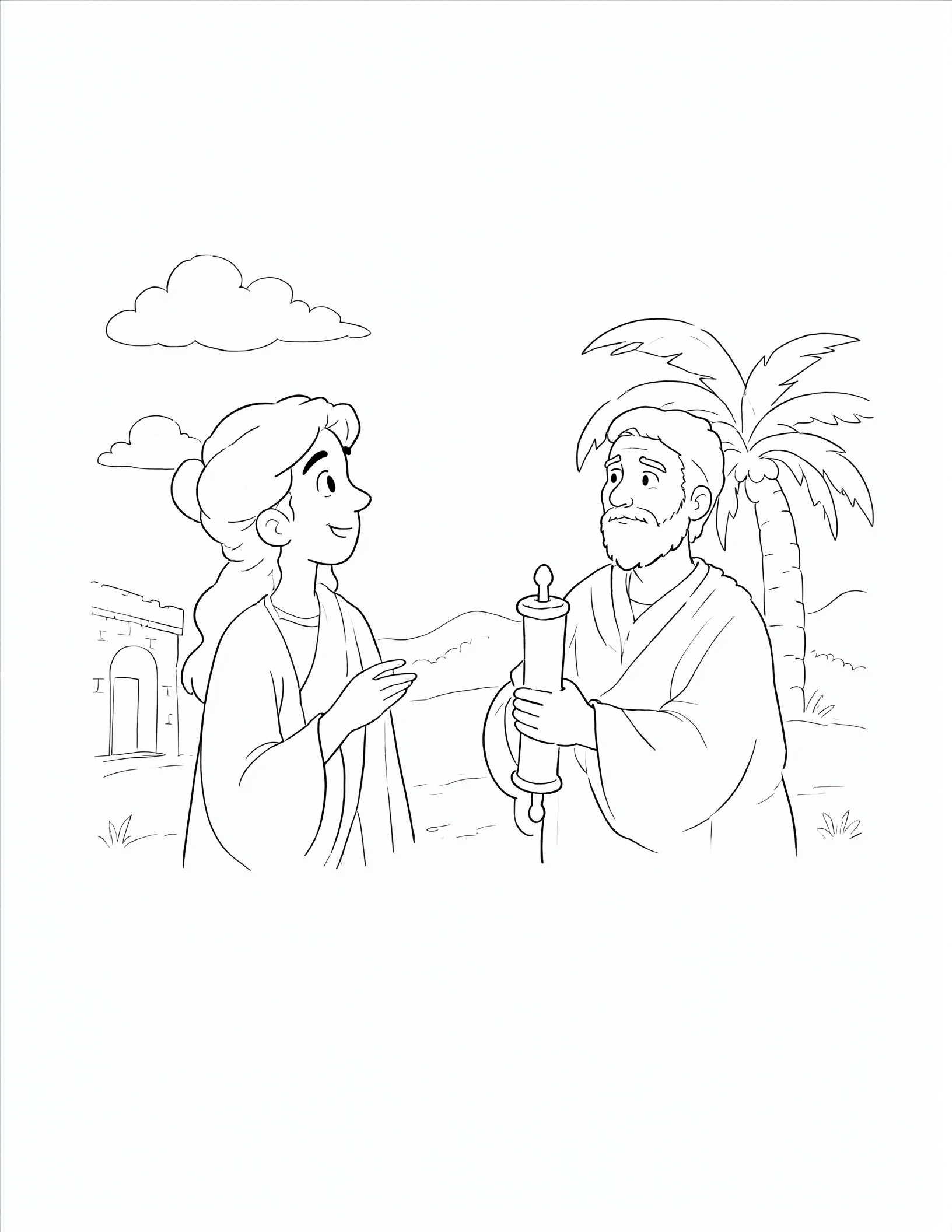
Ojú-ìwé kíkun àwọ̀ ti Ẹ́sítérì tí ń fetí sí Módékáì bí ó ti mú ìwé kíká tí a ká dání nínú àgbàlá lásán kan lẹ́gbẹ̀ẹ́ ewé ọ̀pẹ ńlá kan.

OJÚ-ÌWÉ KÍKUN ÀWỌ̀ BÍBÉLÌ

Ẹ́sítérì àti Módékáì

Ẹ́sítérì 4:8-14

Ojú-ìwé kíkun àwọ̀ ti Ẹ́sítérì tí ń fetí sí Módékáì bí ó ti mú ìwé kíká tí a ká dání nínú àgbàlá lásán kan lẹ́gbẹ̀ẹ́ ewé ọ̀pẹ ńlá kan.

1632 × 2112 px · Ojú-ìwé kíkun àwọ̀

Language in this image

No embedded text

Changing the website language does not change lettering in the downloaded image. About media languages.

Àwọn ohun èlò Bíbélì ọ̀fẹ́ fún ìjọsìn, ilé-ẹ̀kọ́ ọjọ́ Àìkú àti ìkẹ́kọ̀ọ́ Bíbélì.

A fàyè gba lílò àti pínpín kiri fún ẹ̀kọ́ lọ́fẹ̀ẹ́. A kà á léèwọ̀ láti tà á padà fún èrè tàbí láti pín in kiri gẹ́gẹ́ bí ilé ìkàwé ìtajà olùdíje. Òfin lílò àti ìkìlọ̀ nípa ìgbésẹ̀ òfin.


Ìtàn náà

When Haman obtained a royal decree to destroy all the Jews in the Persian empire, Mordecai sent Queen Esther, the cousin he had raised, a copy of the written decree and urged her to plead with the king. Esther replied through the servant Hathach that anyone who approached the king uninvited could be put to death. Mordecai answered that she would not escape by keeping silent, and asked who knows whether she had come to the kingdom for such a time as this.

Ìwé Mímọ́: Ẹ́sítérì 4:8-14

Àwọn ọ̀rọ̀ ìwádìí